THOUSANDS OF FREE BLOGGER TEMPLATES �
Showing posts with label Nature. Show all posts

Saturday, November 24, 2012

Deer in Buddhism


Buddhist monk with dear at Todaiji temple

Japan, the land of the rising sun, has a vast diversity of Buddhist temples. If you are looking for the origin of Buddhism, head to Nara. In the beginning of the 8th century Nara became the capital and emperor Shomu wanted to propagate the newly accepted Buddhism that was introduced in Japan through the Korean kingdom of Paekche. He built the enormous Todaiji temple, still the biggest wooden building in the world until 1998.

Todaiji temple Nara

Walking around the premises of this majestic building you will notice a big lush green park at the main entrance. A happy mixture of sellers, schoolchildren, begging monks and tourists are rejoined by a whole lot of deers roaming though Nara Park.
The Sika deer is a real symbol of Nara; deer senbei (hard cookies) and deer hats are sold, while in October the Deer Horn cutting festival takes place.

Children playing with deer in Nara
Feeding the deer in Nara
The deer in Nara are an amazing site that will always delight tourists and the Japanese schoolchildren. The tame deer can be also be found on Itsukushima island near Hiroshima. The sika deer is native to Japan and can still appears in the wild in remote places like Yakushima in southern Japan.

But why are the deers found in parks close to Buddhist temples and not in any other public park? According the the legend of Buddha after his enlightenment Buddha developed his Dharma or teaching. The first sermon of Buddha happened to be in Sarnath "Deer park" where the deer wandered in peace. And so they became witnesses of his first teaching. In Buddhist iconography the deer stands as a messenger of Buddha and Buddhism. That's why the deer are found in Japan in temple parks.

In the pictures you can find different deer symbols at other Buddhist places in Asia.


Deer in Itsukushima
Deer witnessing the first sermon of Buddha
Deer at the throne of Buddha at Wat Phra Kaew in Chiang Rai, Thailand
Deer on top and on the banners of Tibetan temple in Zhongdian, China


Friday, August 3, 2012

Tibetan train and antelope photoshop


Above posted picture used to be an Chinese award-winning photograph in 2006, celebrating the symbiosis between the modernization of China and its focus on environmental protection. The setting is the vast Tibetan landscape where the Qinghai-Tibet train is cruising through the picture. In the front of the picture a herd of Tibetan chiru deer are seemingly captured by camera.
 
Of course this is old news, but I stumbled on this extraordinary news by doing some research on preservation and environmental protection in China. I thought it was such a bold and typical Chinese way of making the Chinese population proud of the enormous economical advances while keeping a tight grip of troublesome areas like Tibet.

The chiru deer is an endangered species because it is and was hunted for its wool. In recent years the population has grown and China loves to use the chiru, which is actually a kind of antelope, for promoting the nation's preservation efforts. The Tibetan antelope was also used as a mascot, called Yingying during the Olympic Games of Beijing.

While the Qinghai-Tibet railway is a one of the many super works the Chinese government realized in recent years. The whole project measures 1956 kilometers of railway tracks, from which 550 km over permafrost. With an elevation of 5072 above sea level it is the highest train in the world. It was long considered an impossible mission, especially constructing a track though the Himalayan mountains. But the Chinese engineers persisted and needed 675 tunnels to conquer this problem. Probably one of the most daring engineering feats of human history.

But it was also a very controversial project for two reasons. Firstly because it tightened China's grip over Tibet. Starting from 2006 an influx of Chinese invaded Tibet and the Han Chinese population is nowadays greater than the Tibetan one. Hence the yearly problems of Tibetans burning themselves in protests, as everything is controlled by Chinese and all the jobs are give to Chinese instead of Tibetans.

Secondly there were many points of criticism advocating the destruction of nature and habitat for several species. One of those species was of course the Tibetan chiru.

The railway was specially designed with "corridors" to let the wildlife untouched by the railway. These corridors are the spaces between the pylons supporting the railway. Environmentalists claim the Tibetan chiru is too shy and would never come near the man-made railway, especially not when trains would be cruising through.

And this is why photographer Liu Weiqing came to Tibet to prove that there can be perfect harmony between the mega project and the nature surrounding it. Mr Liu is working for Xinhua, the biggest state-owned news agency and he tells a story of waiting for 8 days in a pit near the railway to take this perfect shot. The picture was acclaimed by CCTV, the Chinese state media and was elected to one of the "10 pictures of the year". The picture was used as perfect propaganda and was even used to plaster the walls of the Beijing subway.

Unbelievers opened up internet micro-blogs to contest the incredibility oh this picture. Biologist commented that it was strange that in the picture pregnant antelope were accompanying the herd, while there were no youngsters. The first train departed in July, just after the antelopes would have been given birth, so youngsters should be seen and pregnant antelopes would only be expected one year later.

Photograph experts questioned the possibility to capture a fast moving train in the background with a slower galloping herd in the front.

So finally it was detected that the picture was a fraud. Two pictures photoshopped together. Mr Liu had to publicly apologize and some media published an apology for circulating the photo.

A piece of perfect propaganda was blown to smithers!


Saturday, July 7, 2012

Collection of Flowers of Thailand

Hanger Lobster Claw
Pink Bananaflower
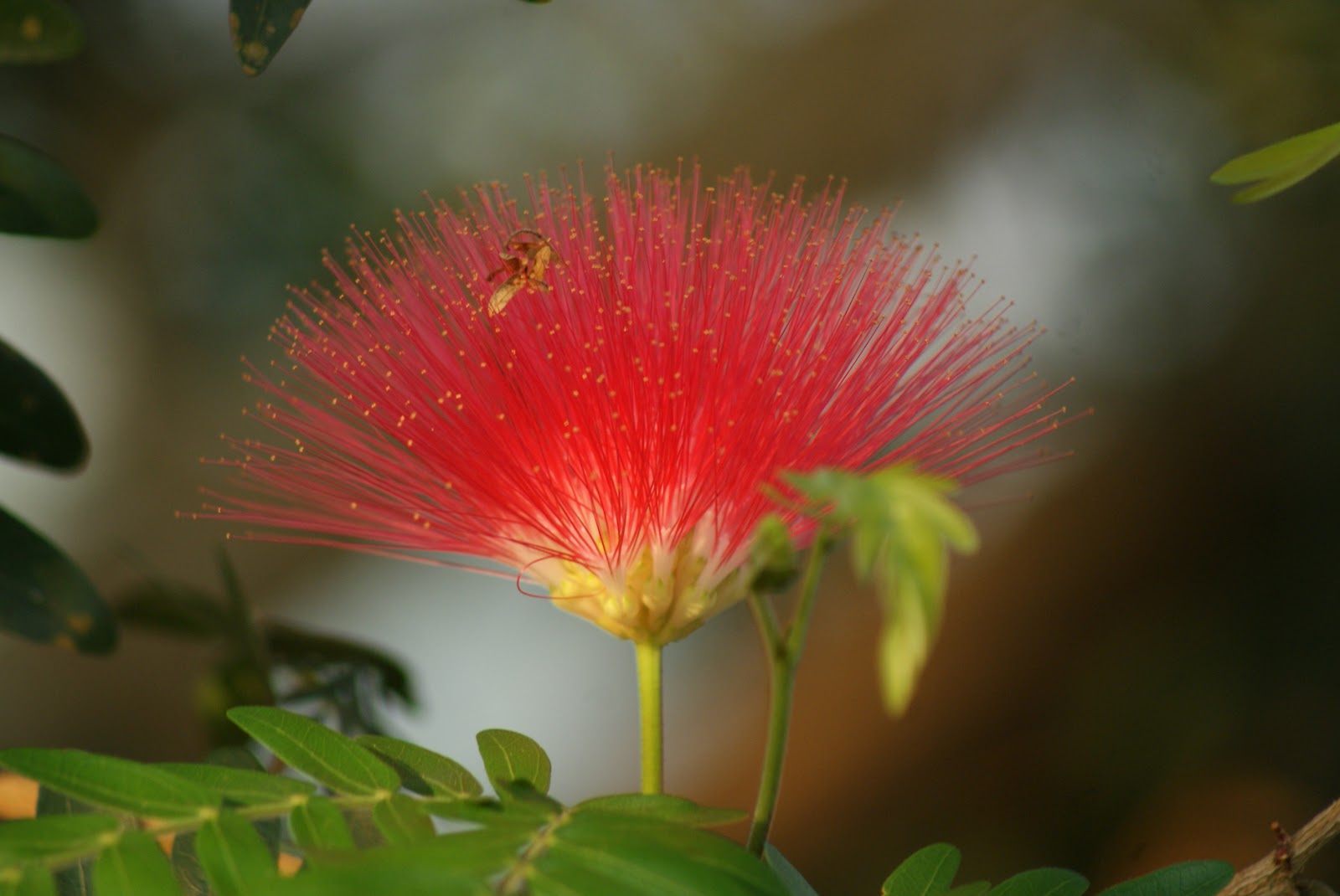
Red Powder Puff

Frangipani Flower
Red Torch Ginger

Parrot Flower

Star Orchid

Flower of the Cannonball Tree

Sunday, December 18, 2011

Foxface - Curious Japanese fruit

This fall I noticed different Ikebana pieces in Japanese hotels which were included a strange yellowish kind of fruit. Japanese people told me it was called "Kitsune gao", meaning Foxface.
Searching a bit further on the net it was revealed that "Foxface" was also commonly used in English. Other names for this strange fruit are: Nipplefruit, Titty fruit, Cow's Udder, Five fingered eggplant or 'Apple of Sodom".
Foxface would be family of eggplants and tomatoes, and bears fruit in fall.
The fruit is not edible and even poisonous, but it is used for decoration. And it is perfect to fit in ikebana pieces as it doesn't require water and will last for two months.

By the way a person called "Kitsune gao", fox face person in Japan, would be considered a person with feigned ignorance.


Tuesday, November 29, 2011

Pictures of floods in Ayutthaya and Bangkok

Thailand is suffering its worst flooding in the last years. During a trip in Thailand it was clear the situation got better in most part of the country. But the rice fields in the Central are still submerged. Ayutthaya on the other hand is almost cleaned up and soon back fro business. 

Mosque in Ayutthaya

Driving on the highway

Protecting Wat Arun in Bangkok

House in Bangkok Noi

House in Bangkok Noi

Cleaning up action in Ayutthaya

Wat Mahathat, clearly visible where the water stood

Volunteers clean up

Sunday, October 23, 2011

Some birds of India


Friday, October 21, 2011

Seychelles' Love trees

According to local legends on a night lit by a full moon in the archipelago of the Seychelles a thick mist is covering the jungle. In this thick sweet mist lovers are mating, interlocked in a mystic dance. These lovers are no humans but the old endemic palm trees on the Seychelles. At the climax of the mating dance palm leaves are intertwined and sweet flowers bloom in the air. This ritual will bring ensure the coming generations of the forest.


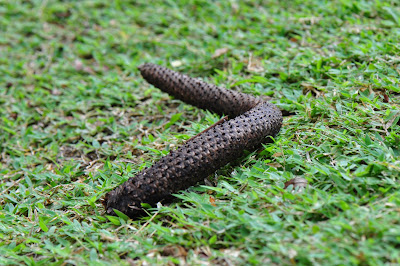
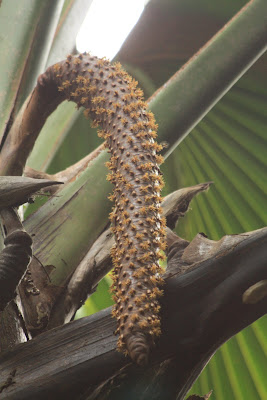
The palm tree mentioned in this legend is de "Coco de mer" or "Lodoicea Maldivica". The later name is a Latinised for of Louis, referring to King Louis XV. This palm tree is an endemic sort of the Seychelles and the coco de mer palm tree has separated male and female trees. Seeing the shape of the enormous  female coconut and the male catkin, which can grow up to 1 meter in length, it is not difficult to imagine numerous love myths being created about this tree.
The erotic curves of the fruit and flowers of the Coco de mer was enough to let general Charles George Gordon proclaim the Seychelles as the real Garden of Eden in the 19th century.

Nowadays most of the Seychelles are declared a UNESCO World Heritage and are well protected.


Tuesday, September 6, 2011

Lotus flowers

Last month the Lotus flowers were blooming some wonderfully. So I uploaded some shots taken @ Yuanmingyuan in Beijing, China and @ Anapji pond, Gyeongju, Soutjh-Korea.